Music can be learned at any age, but children and adults come to lessons with different backgrounds. Children develop basic habits more quickly: how to sit at the instrument and how to listen to the rhythm. Adults are more interested in specific goals, such as playing a favorite song, reviving forgotten skills, or learning to sing confidently. Music lessons should take these different approaches into account. Children need play, repetition, parental support, and small victories. Adults value logical lessons and the sense that music is not becoming a second job.
Different Tempos, Different Criteria for Success
Children’s progress can be erratic. One day, they cannot play a rhythm; a week later, they suddenly do so with ease. This is normal. Children’s brains and attention spans develop unevenly. Teachers must take into account a child’s age, coordination, and emotional state. A lesson that works well one week may need to be adjusted the next.
Adults’ progress is different. They may grasp theory quickly but adapt their movements more slowly. A beginner guitarist may know how to position their fingers correctly, but their hand still tenses. A vocalist may understand the need to breathe freely, but the body automatically tightens.
Children’s Lessons Begin with Attention
Children rarely see a lesson as a long-term project. For them, 30 minutes at the instrument becomes a concrete experience in the here and now: whether it is interesting or boring, whether they succeed or not, whether they are praised or rushed. A good children’s lesson is built around maintaining attention, changing activities, and enjoying the results achieved.
In children, musical learning is closely linked to movement, hearing, speech, and motor skills. Regular lessons help develop attention and working memory. These skills are useful at school, in communication, and in everyday tasks.
The Role of the Teacher in a Children’s Lesson
For a child, the teacher is not only an instrument specialist, but also a director, an observer, and a translator from the language of music into the child’s experience. One child understands rhythm more easily through clapping, while another masters it more quickly through steps. When teaching children, explanations alone are not enough. Words quickly lose their power if they are not followed by action. A child often learns through repetition, play, demonstrations, short tasks, and immediate feedback.
Why Parents Should Not Just Be Spectators
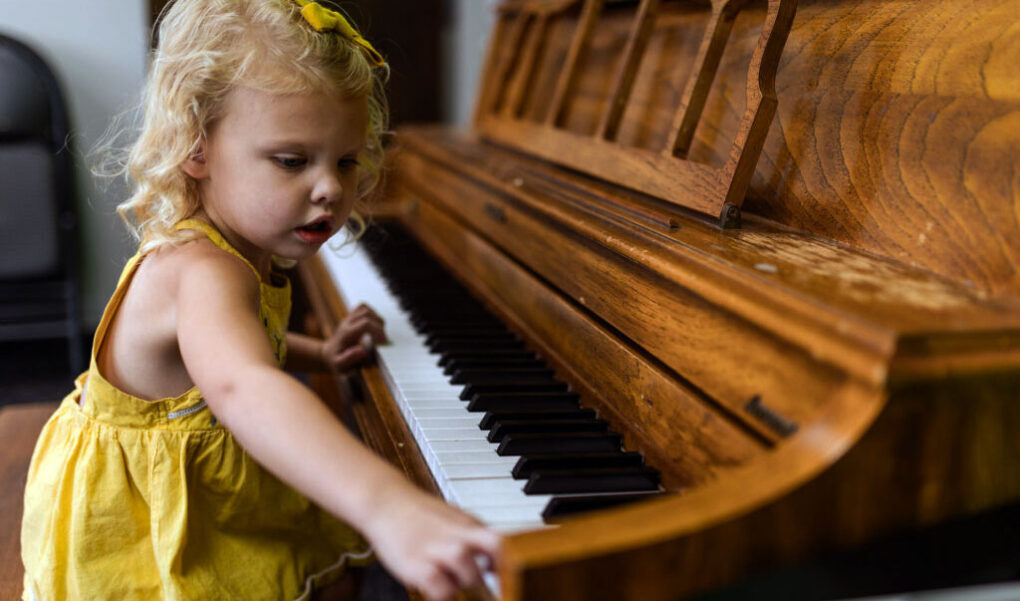
Adult students decide for themselves when to open their sheet music and how many times to repeat a difficult passage. For a child, parental support is essential. Family involvement helps maintain interest, build a practice routine, and overcome difficult stages with more confidence. On the other hand, support should not mean control. If home practice turns into a daily strict exam, interest fades. A child needs encouragement, structure, and patience, not constant pressure.
An Adult Student Brings Their Own History to the Lesson
An adult student already has developed tastes, favorite performers, past experiences, insecurities, habits, and sometimes a fear of making mistakes. While a child can play awkwardly and laugh, an adult often becomes frustrated with every imprecise note.
Adults understand the purpose of a scale or the importance of proper posture more quickly. Adult learning theory emphasizes self-direction. People engage better when they understand the purpose of the lesson and can connect learning to their own experiences.
Children are often given short, repetitive assignments. For adults, it is more helpful to explain how to practice. They are more willing to do the work if they understand the purpose of the exercises. Transparency reduces frustration and helps prevent students from quitting when progress becomes less noticeable. Adults need to see not only what to repeat, but also why they are repeating it.
Age Is Not a Barrier
Many adults fear that it is too late to start. In practice, age is less of a barrier than the expectation of quick results. A person becomes used to being competent in their profession, everyday life, and social interactions, but in their first music lesson, they once again face simple challenges.
The adult brain retains the ability to change. Playing an instrument is often described as a complex task in which several processes are involved at the same time:
- hearing;
- vision;
- movement;
- memory;
- attention.
This multi-layered nature makes music a powerful brain workout, even for adults who start practicing later in life.

How Motivation Differs
Children’s motivation is often extrinsic. Their parents may have brought them to lessons, they may want praise, dream of performing in concerts, or even imagine becoming famous. Over time, extrinsic motivation can become intrinsic. For this to happen, lessons must provide a sense of personal involvement. A child should feel that music is not only an obligation, but also something they can shape and enjoy.
Adults’ motivation is more fragile because of time constraints. They may have a strong desire to learn but miss lessons due to work, fatigue, or family circumstances.
What Helps Students Stick to Their Lessons
Children and adults do not need heroic willpower as much as a well-structured environment. Music becomes part of their lives when practice feels realistically achievable. It is better to practice calmly for half an hour a few times a week than to force yourself through long sessions at the weekend. It is helpful to establish simple rules in advance:
- practice at the same time;
- set small goals for the week;
- record yourself on video or audio to track progress;
- alternate technical exercises with music you genuinely enjoy;
- discuss problems with the teacher, including fatigue, boredom, or fear.
Why Comparisons Hinder Both Groups
Comparisons with talented students are almost always unhelpful. A musical path depends on the frequency of lessons, the quality of practice, the instrument, emotional support, and personal goals. One student simply wants to play at family gatherings, while another dreams of continuing their education at a music college. Results depend on intensity, the age at which a person begins, and the nature of the lessons. It is fair to say that music does not make everyone a genius; it provides a challenging and rewarding workout for the brain and body.
Online Lessons Are Also Perceived Differently
Children in online lessons are more dependent on how the space is organized. They need a tuned instrument, a camera, adult assistance, and the absence of unnecessary distractions. If a young child is left alone in front of a screen, it is more difficult for the teacher to control posture, hand position, attention, and mood.
Adults often see the online format as convenient. There is no need to travel far; it is easier to fit a lesson into the workday, and it is possible to record part of the lesson and watch it back.
Childhood provides a good foundation for the development of hearing, motor skills, and attention. The advantage of adulthood is the ability to make conscious choices. When the method is age-appropriate, lessons stop being a test and become an opportunity for a person to hear not only the sounds of the instrument but also their own progress.